
A Review of "The Land Between" by David Fedele
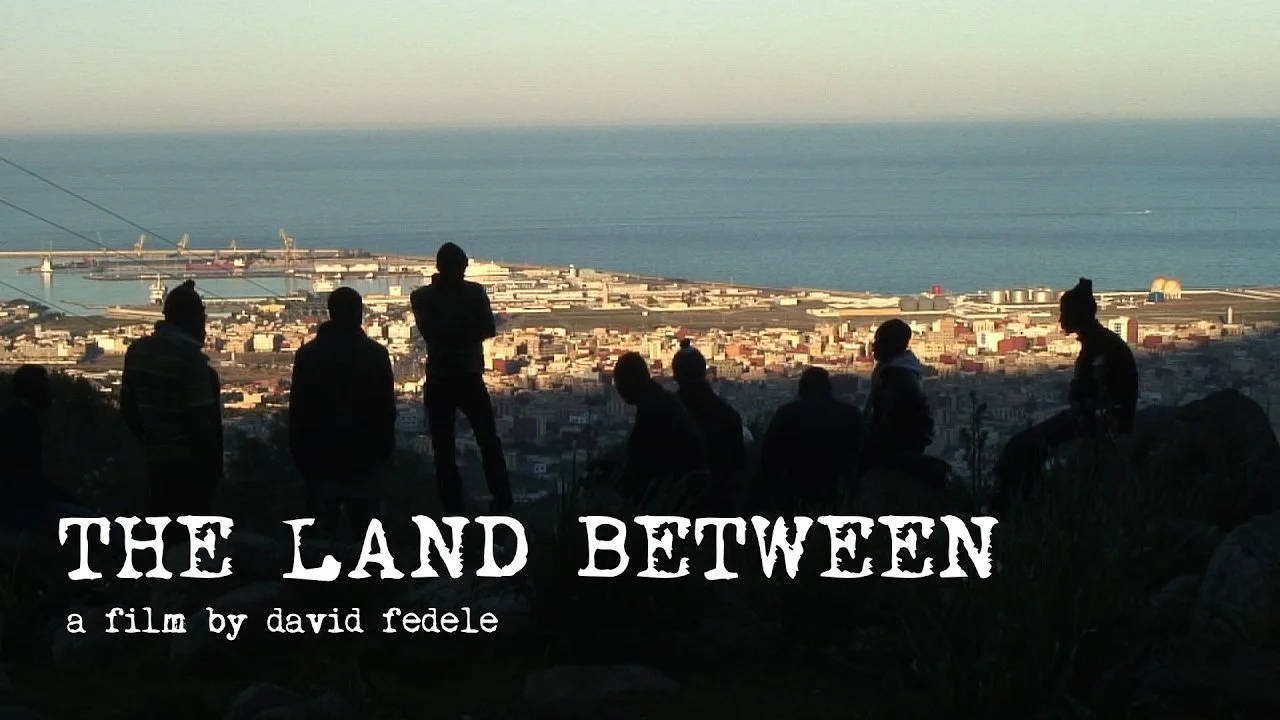
The Land Between (2014) is a self-made documentary filmed, edited and directed by Australian filmmaker David Fedele. Fedele describes himself as an award-winning documentary filmmaker, a world traveler and wonderer, a musician, and a part-time philosopher. Filmed in 2014 within the valleys of Gourougou in Northern Morocco, The Land Between features the struggle of tens of Sub-Saharan migrants who dwell and hide in these mountains outside of established smuggling and trafficking networks. Fedele is mainly concerned with themes of cultural, humanitarian, and social justice. Thus, this documentary aims to spread awareness of the ongoing migrant crisis in Morocco by documenting their daily life.
The majority of migrants in Gourougou aspire to reach Melilla, an independent Spanish city and a European exclave in Africa situated on Morocco's northeast shore.The European Union established and sponsored a barricade between the two continents with the primary goal of preventing African migrants from entering Europe.
Morocco receives millions of euros from the European Union to monitor and prevent access to this state line and the forests. In an article by the Reuters reporter Ahmed Eljechtimi (2019), the European Union granted Morocco 140 million euros for border management assistance during 2018 alone. This documentary exposes -with direct and unlimited access- the daily lives of those same migrants stuck in limbo, including the terrible brutality and frequent maltreatment they encounter from both Moroccan and Spanish officials. Moreover, it delves into several common issues, such as how and why individuals are willing to sacrifice everything they own, including their own lives, all intending to leave their homeland, family, and friends seeking a better life. Through the themes discussed in this movie, the director shows effort in showcasing that immigrants are just like other people living in the world who have children, families and life goals that they want to achieve, which can only be obtained by fleeing persecution and finding a better life in Europe.
Fedele succeeded in establishing a relationship with the subjects that the documentary has shown. It was close and friendly, and the subjects were open to sharing any ideas from their political views and personal lives. The migrants showed signs that they were comfortable and open to discussion and participating in this filmed work. There were instances where the subjects were very comfortable talking to the filmmaker and mentioned that he was filming them and that they enjoy being filmed doing their daily routine.
Before watching the documentary, I have learned about this migrant situation from visiting the northern and eastern parts of Morocco. The short sea distance of 15 kilometers between Spain and Morocco and the two Spanish exclaves on Moroccan soil, Melilla and Ceuta. However, I was not previously aware of the migrants' struggles and their everyday lives. Moroccan media censor information, and it is not easy to know the reality of their situation without the documentation of independent filmmakers, journalists and photographers. The Land Between has exceeded my expectations and has shown an increasing amount of information, and personal experience as the movie proceeded. I expected that the movie would be a voiceover narrated documentary where the filmmaker controls all said. However, it was contrary to what I assumed and has provided the details from the migrants themselves. Concerning the ethics of ethnographic research, video ethnography is the documentation of people's activities in their surrounding environment to observe, analyze, and portray society and culture. The filmmaker shows a great sense of ethnographic ethics and awareness of establishing a non-hierarchical video ethnography through his film. Because such divisions are always hierarchical and linked to broader geopolitical systems of power, Lila Abu Lughod suggested in her infamous publication, locating ethnography, that we need to develop methods that work against the typifications of communities that made them into different and foreign cultures (2000).
The documentary starts with clips from the Moroccan-Spanish border, with close-up shots of the barricades and fences indicating the high-security measures taken, with additional written text to explain the situation of migrants stuck in the Gourougou mountains. As the film proceeds, the filmmaker introduces us to several migrants who tell their stories directly, focusing on two protagonists: Yacou Traore and Aicha Barry. Yacou is a migrant from Mali who left his village when he was 18, leaving his family and pregnant wife and has migrated by land, who also has been living in the Gourougou mountains for a few years. Yacou mentions that his migration happened because of a lack of jobs and money and because the land has become dry in the last few years, and harvesting does not provide any revenue. The second protagonist, Aicha Barry, escaped war in Liberia after her husband's murder in 2011. She crossed the borders of Ivory Coast, Mali, Mauritania to reach Morocco, all while being eight months pregnant with her fourth son and with her three children accompanying her. Aicha has shown clear signs of psychological trauma and has expressed that she has sleepless nights remembering the memories from the war in her country. Aicha also talks about Moroccan migrants in Ivory Coast and being treated fairly, but she is receiving brutal treatment from Moroccans in their country. The documentary continues with filming refugees' daily routine and ends with people singing around the campfire and hoping for a better future for themselves, bypassing the border.
The Land Between provides an apparent reference to several human rights violations in place. The first one is that the principle of non-refoulement is absent, which states that seeking refuge may not be sent back to a country where there are reasonable reasons to fear they would be persecuted. A violation of this principle is considered a violation of the Human Rights Law (Rodenhäuser, 2018). It is also important to note that Morocco is considered a transit country for these migrants who aim to reach Europe. In addition, physical violence is used regularly. The director documents the death of one of the Cameroonian migrants because he was beaten on his head, which caused an internal hemorrhage, resulting in death. In clips filled with agony, one of the migrants expressed that: "The (Moroccan) military beat us, they beat our arms, break some peoples' legs and heads." Moreover, the living conditions are challenging, with tents made from cardboard and food made from people's rubbish, the migrants find it difficult under harsh winter conditions. The filmmaker also expressed empathy for the four children of Aicha Barry; several shots indicate that children received new clothes, shoes, toys and coloring tools which is extremely valuable for children at this age.
Islamic ethics issues are also showcased in the documentary. Aicha mentions that the military does not harm her, and her children, given that they stick to the Islamic ethics of not harming women and children. Many Muslim scholars have understood the Shariah to advocate for positive discrimination in aiding such populations. Moreover, the Qur'an emphasizes the necessity of safeguarding the rights of vulnerable women and children in numerous circumstances. However, we see a significant denial of fundamental rights such as education and healthcare in Morocco for these migrants, which shows a lack of Islamic ethics. In addition, security and safety are not provided, especially with the raids that the military does. Security should be granted to all refugees regardless of their beliefs. In Islam, it is the hosts' responsibility to ensure the safety of their visitors and refugees residing in their countries. When it comes to Islamic ethics within the migrants' community, one of the interviewees has said that they share food and do not steal or harm each other, all to maintain peace in their community.
Visually, The Land Between succeeds in allowing the audience to feel that they are with the characters. Including cooking and sharing food scenes, shaving at outdoor barbers, hammering a ladder that is being used to escape and showing the migrants training with bending the ladder against a tree and climbing it in groups before hiding it between the bushes. Using natural sounds and the absence of background music, the atmosphere sounds are well recorded and create a feeling of belonging. In addition, the filming angles were humane; all filming, mainly interviews, were shot from a low angle which did not give an impression of the superiority of the filmmaker, in addition to giving the subjects enough time to express themselves and talk without interruption.
What caught my attention in the documentary is the variety of migration methods that the migrants think about using despite being in the exact location, depending on their situation. For example, Yacou’s way of crossing the border is by using the ladder and climbing the fence, while for Aicha and her Four children, it was by paying a smuggler at least 3000 Euros to hide in their car enter Melilla. She is working to save money by selling beads and necklaces. One of the excellent points the filmmaker paid attention to is choosing to focus on one leading male and one female subject to give different perspectives for each and include children in the film and other migrants. It would have been a great advantage if the filmmaker could include a short interview with a military officer who works in regulating migration, however, it is understandable that the authorities’ involvement could have impacted the process of filming and continuing this documentary.
Fedele’s documentary showed great understanding of the refugee and migrant situation and has provided valuable primary source data on the subject. It was extremely informative given the variety of interviewees and the method used to interview them. To conclude this documentary review on a positive note, I was happy to find a YouTube video on David Fedele’s channel which shows that Yacou has successfully reached Spain and that the filmmaker has met him a year later to show him the final result of the documentary (Fedele, 2014). This consideration from the filmmaker to include his subjects in all production steps even after the film's distribution is worth appreciating.
